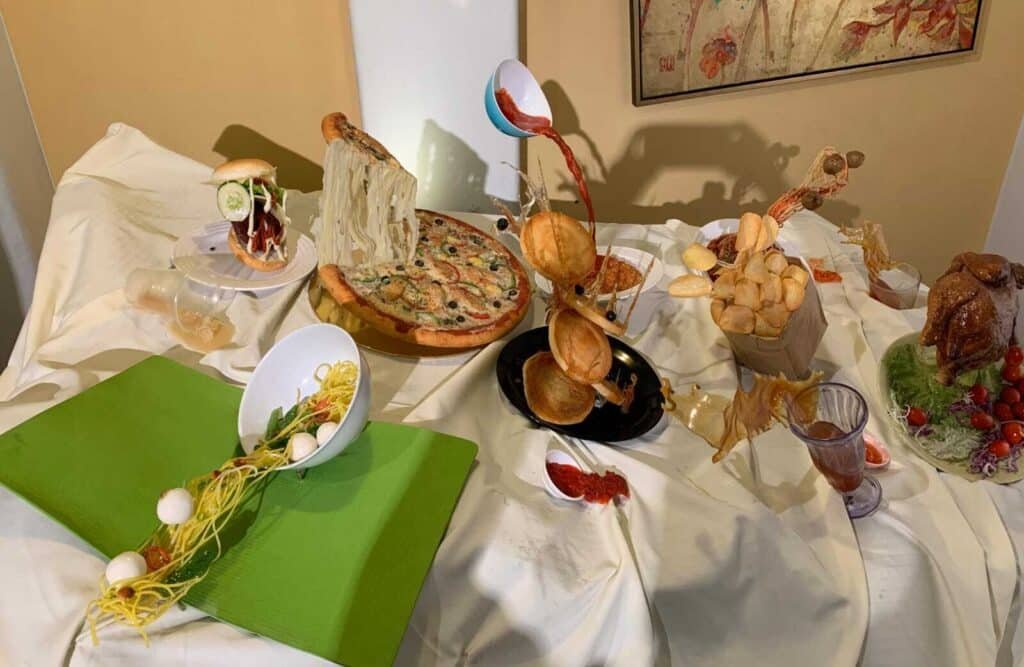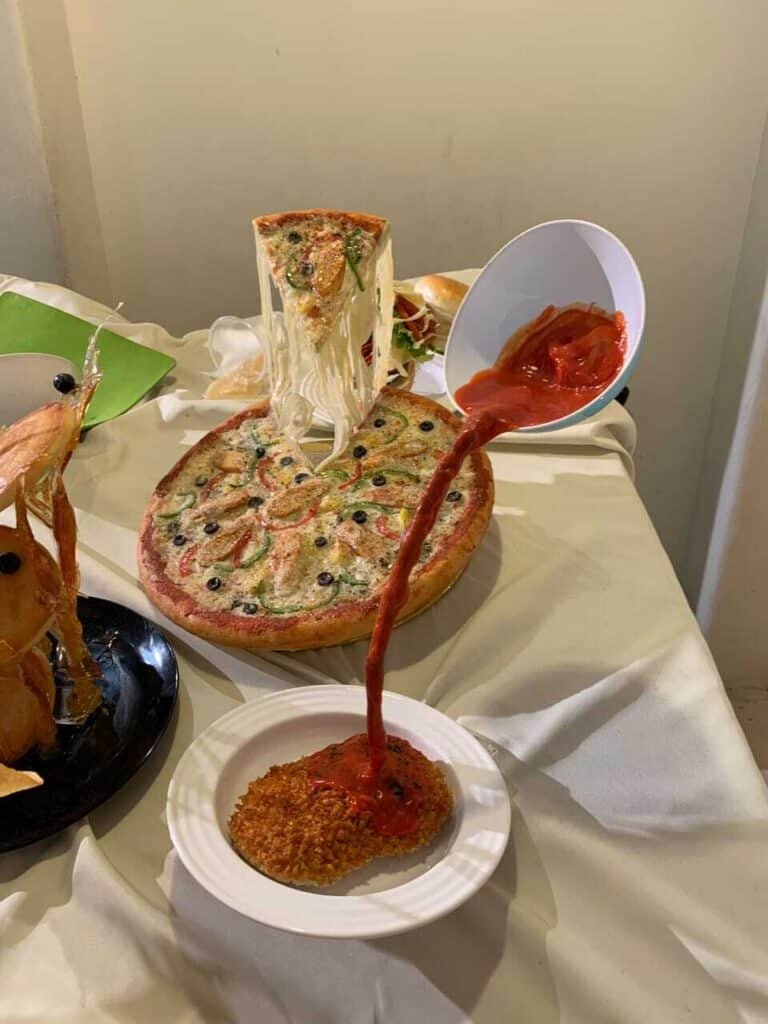
Replica food did not become an industry in Japan. It became a discipline.
Long before replica food was viewed as decorative or commercial, Japan treated it as a practical and cultural responsibility. What began as a tool for menu clarity evolved into a refined craft known globally as sampuru — a standard of hyper-realistic food replication built on accuracy, restraint, and respect.
Today, when restaurants around the world reference “high-quality food replicas,” they are often unknowingly referencing principles established in Japan decades ago.
It Started With Communication, Not Aesthetics
In the early 20th century, Japanese restaurants faced a simple challenge: how to clearly present dishes to customers from different regions, literacy levels, and language backgrounds.
The solution was visual.
Instead of relying solely on written descriptions, restaurants began displaying three-dimensional replicas of their dishes. These were not stylised props. They were exact representations of:
● Portion size
● Ingredient composition
● Plating structure
● Texture and colour
From the beginning, the purpose was clarity — not embellishment.
This functional origin shaped everything that followed.
Accuracy Became Cultural Practice
In Japanese dining culture, presentation is not separate from the meal — it is part of the experience. A visual misrepresentation would not simply be considered an aesthetic flaw; it would be viewed as misleading.
As a result, food replicas developed under strict, almost unspoken rules:
● No exaggerating portions
● No enhancing colours artificially
● No altering plating for visual drama
● Absolute loyalty to the real dish
This commitment to accuracy is what separated Japanese replica food from decorative display models seen elsewhere.
Replica food became visual documentation.
Craftsmanship Was Never Compromised
Another reason Japan set the global standard lies in its broader craft philosophy.
Japanese craftsmanship traditionally values:
● Precision
● Patience
● Material mastery
● Respect for process
Replica food followed the same mindset. Artisans studied real dishes under natural lighting, recreated textures layer by layer, and selected materials capable of mimicking translucency, gloss, and structural detail.
The result was hyper-realistic food replicas that:
● Withstood time
● Maintained colour integrity
● Preserved fine detail
● Remained visually truthful
This was not mass production. It was disciplined craft.
Sampuru Became a Benchmark
Over time, sampuru became synonymous with quality in food replication. Restaurants across Asia adopted similar practices, but Japan remained the benchmark because it never reduced the craft to decoration.
Even today, high-quality replica food worldwide traces its methodology back to Japanese standards.
The difference is philosophical:
● Decorative replicas aim to attract attention.
● Japanese sampuru aims to communicate honestly.
That distinction matters.
Why This Standard Matters Today
In modern global dining cities like Dubai, restaurants serve customers from dozens of cultural backgrounds daily. Language alone cannot guarantee clarity. Visual understanding becomes essential.
When replica food exaggerates or distorts reality, it weakens trust. When it mirrors the dish precisely, it strengthens confidence.
Japan set the global standard because it understood something fundamental:
Visual accuracy is a form of respect.
Respect for the cuisine.
Respect for the chef.
Respect for the customer.
How This Influences Replica Gallery
At Replica Gallery, this Japanese philosophy guides our approach. As Dubai’s first studio dedicated exclusively to hyper-realistic replica food, we apply sampuru principles to regional and international cuisines with the same discipline.
We begin with real dish references.
We follow cuisine-specific presentation standards.
We avoid stylisation and exaggeration.
Because the global standard is not about appearance alone — it is about integrity.
Final Thoughts
Japan set the global standard for food replicas not because it invented the idea of imitation, but because it elevated replication into a disciplined craft rooted in honesty.
In today’s competitive hospitality environment, that philosophy is more relevant than ever.
Replica food, when executed with precision and cultural understanding, becomes more than display. It becomes a silent promise that what customers see is exactly what they will receive.
And that promise is what true standards are built on.